
Customer Success Operations: The Next Evolution of Customer Success?
Over the last 16 years working in SaaS, I’ve seen Customer Success change dramatically.
When I first started, being called a Customer Success Manager often felt like shorthand for: James does a bit of everything, so let’s call him that.
And honestly, that was true for a lot of people around me.
A lot of early Customer Success hires were smart, capable generalists who’d come in through support, account management, project management or customer service. The conversations were usually centred around support and retention. Business goals, customer outcomes, customer success strategy and commercial impact were talked about far less than they are today.
Also, the CSM role was less well defined between businesses and its value not always understood by customers. While its generally suggested that the first CSM roles started back as early as 1997, its only in more recent years I can say it work as a Success Manager at a social event and have to launch into an explanation to fill the dead air.
Back then my usual answer could be summed up as something on the lines of:
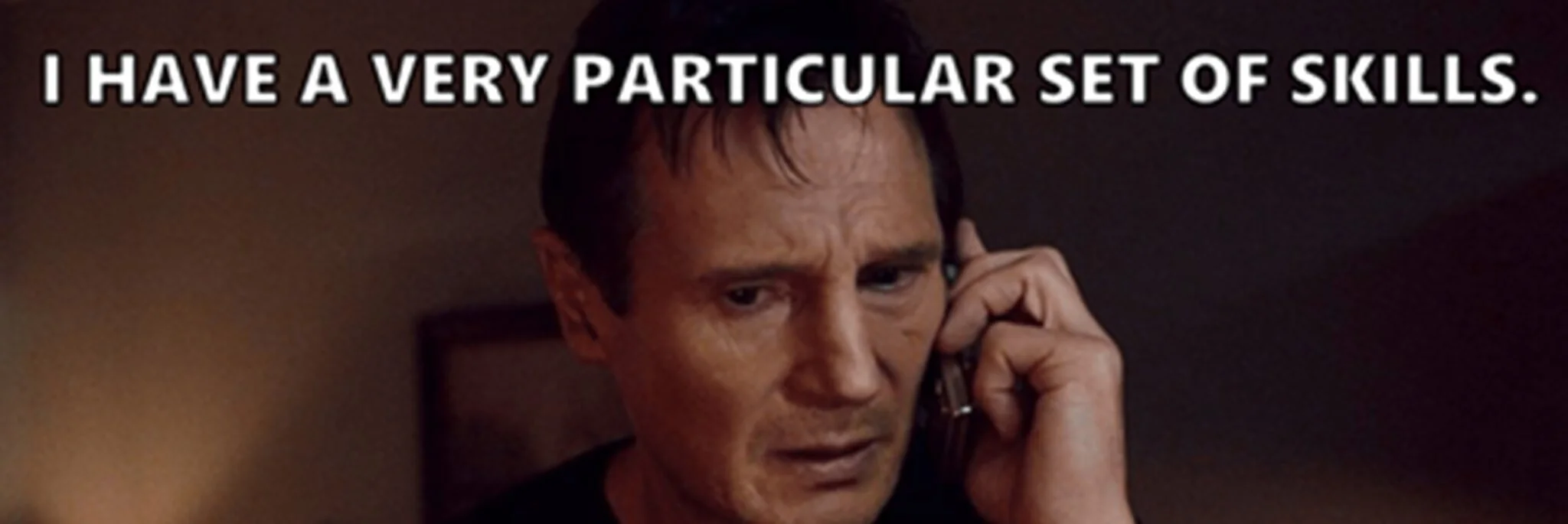
“I don't know who you are. I don't know what you want. If you are looking for ROI, I can tell you I have Cost Savings. What I do have are a very particular set of skills, skills I have acquired over a very long career. Skills that make me a nightmare for Churn.” … I may have paraphrased the quote a bit but you get the idea.
Then came the next phase: automation.
Not AI in the way we talk about it now, but rules, processes, spreadsheets, dashboards and automated task generation based on observable metrics. At the time, many Customer Success teams were still seen as a cost centre, so the focus was often on scale and efficiency. How do we monitor risk? How do we manage adoption? How do we cover more customers with fewer manual touchpoints?
That thinking made sense for the stage many businesses were at, but it also meant there was often less space to talk properly about customer goals and how to achieve them.
By the late 2010s, that started to shift.
Customer Success teams began proving that great relationships, strong guidance and shared goals could do far more than just reduce churn. They could drive growth. They could increase value. They could strengthen partnerships. And that helped move Customer Success from being seen as a support function to being recognised as a strategic one.
Then the world changed again.
Covid, war and wider instability have made businesses more cautious and more risk averse. In that kind of environment, companies want to hold on to what they have. That means Customer Success has become even more important, but also more accountable.
It’s no longer enough to say a customer is happy. We need to be clear on what they’re trying to achieve, agree success measures with them, and know how we’re tracking progress against those goals.
That’s why I believe Customer Success Operations, or CS Ops, is the next major evolution of Customer Success, and probably the least well-defined one.
AI is now more than capable of monitoring many of the indicators we used to dig around for manually: risk signals, adoption patterns, usage changes and other key trends. Combined with strong dashboards, intelligent workflows and good Customer Success Operations support, that gives Customer Success Managers the chance to focus less on chasing data and more on the qualitative side of the role: relationships, context, goals and judgement.
But I also think a lot of businesses still misunderstand what CS Ops is.
I’ve often seen it treated as a scale, digital or tech-touch function, or as a place to move Customer Success Managers who are handling larger books of business in a different way. For me, that misses the point.
At its best, Customer Success Operations should be the right hand to the Customer Success leader. The role should exist to keep the whole function focused on customer goals, success stories, useful signals and timely action. It should bring the numbers, the systems and the operational discipline together with intelligent use of AI, so the team gets sharper, faster and more proactive without losing the human side of Customer Success.
Customer Success Operations Manager should be your teams “Man in the chair” feeding the front line heroes with the latest and greatest tools and insights.

Lets be honest, Ned would make a great CSOP’s Manager.
For me, that’s what great Customer Success looks like now.
CSOPs - Not humans replaced by automation. Humans supported by better insight.
It’s about getting the right insights to the right people at the right time, so interventions happen early, conversations are more meaningful, and customers get real value.
That matters whether a business wants to hire Customer Success Managers, strengthen its customer success strategy, invest in Customer Success consulting, or even hire a Chief Customer Officer to build a more mature customer function.
The tools have changed. The expectations have changed. The function has matured.
But the heart of the role is still the same: understand what matters to the customer, help them achieve it, and build the kind of trust that makes the relationship stick.
So I’m curious: have businesses really considered what Customer Success Operations roles should be yet? What do those roles look like in practice? And are we ready to define them properly?
Because for me, it’s not just about managing scale. It’s about creating the conditions for Customer Success Managers to stay focused on goals, value and customer success, while data, systems and AI help supercharge the team behind the scenes.
At Pivotal Path, these are exactly the kinds of questions we help organisations think through, from customer success strategy and customer experience to digital transformation and the operating models that support long-term growth.
