
Crafting an Effective Customer Success Strategy for Your Business
I've worked in customer success for a long time. Long enough to have watched it grow from a vague idea into a full-blown function, then watched it fragment into job titles nobody quite agrees on, then watched a lot of businesses end up with a customer success team that exists on paper but doesn't really know what it's doing.
So when someone asks me how to craft an effective customer success strategy, my honest answer is usually the same. Stop trying to copy what someone else does. Start with what your customers actually need from you, and build outwards from there.
That sounds simple. It really isn't. But it's the bit that gets skipped most often, and it's the bit that makes the difference between a customer success function that drives the business and one that just sits in the org chart.
What customer success actually is
Let's strip away the jargon for a moment.
Customer success is the work of helping your customers get genuine value from what they bought from you. Not just using your product or service, but actually getting the outcome they came to you for in the first place.
That's it. Everything else, the playbooks, the health scores, the QBRs, the renewals motions, the expansion strategies, all of it should serve that one job.
When customers get the value they came for, they stay. They buy more. They tell their friends. When they don't, no clever retention tactic will save you for long.
I've seen customer success teams who can rattle off their NPS, their gross retention, their net retention, their playbook completion rate, but can't tell you in plain words what their customers were trying to achieve when they signed up. That's the wrong order.
Why most customer success strategies don't work
I'll be straight about this. A lot of customer success strategies look great in a slide deck and don't work in real life.
There are usually a few reasons.
The strategy is built around what's easy to measure rather than what actually matters. Health scores get built on engagement metrics rather than outcome metrics. Tools track logins instead of value delivered. The team optimises for what looks good on a dashboard.
The strategy assumes all customers want the same thing. Which they don't. The customer who bought because they're trying to grow has very different needs to the one who bought because they're trying to consolidate. Treating them the user-message costs you both.
The strategy isn't owned by anyone senior. Customer success often sits awkwardly between sales, product, support and ops. If nobody at the leadership table is willing to fight for it, it gets squeezed by everything else.
The team is set up to react, not to lead. They get pulled into firefighting and never get to the proactive work that actually moves the numbers.
If any of that sounds familiar, you're not alone. Most businesses I work with have at least one of these patterns.
Where to actually start
Before you write a single playbook or buy a single tool, get clear on three things.
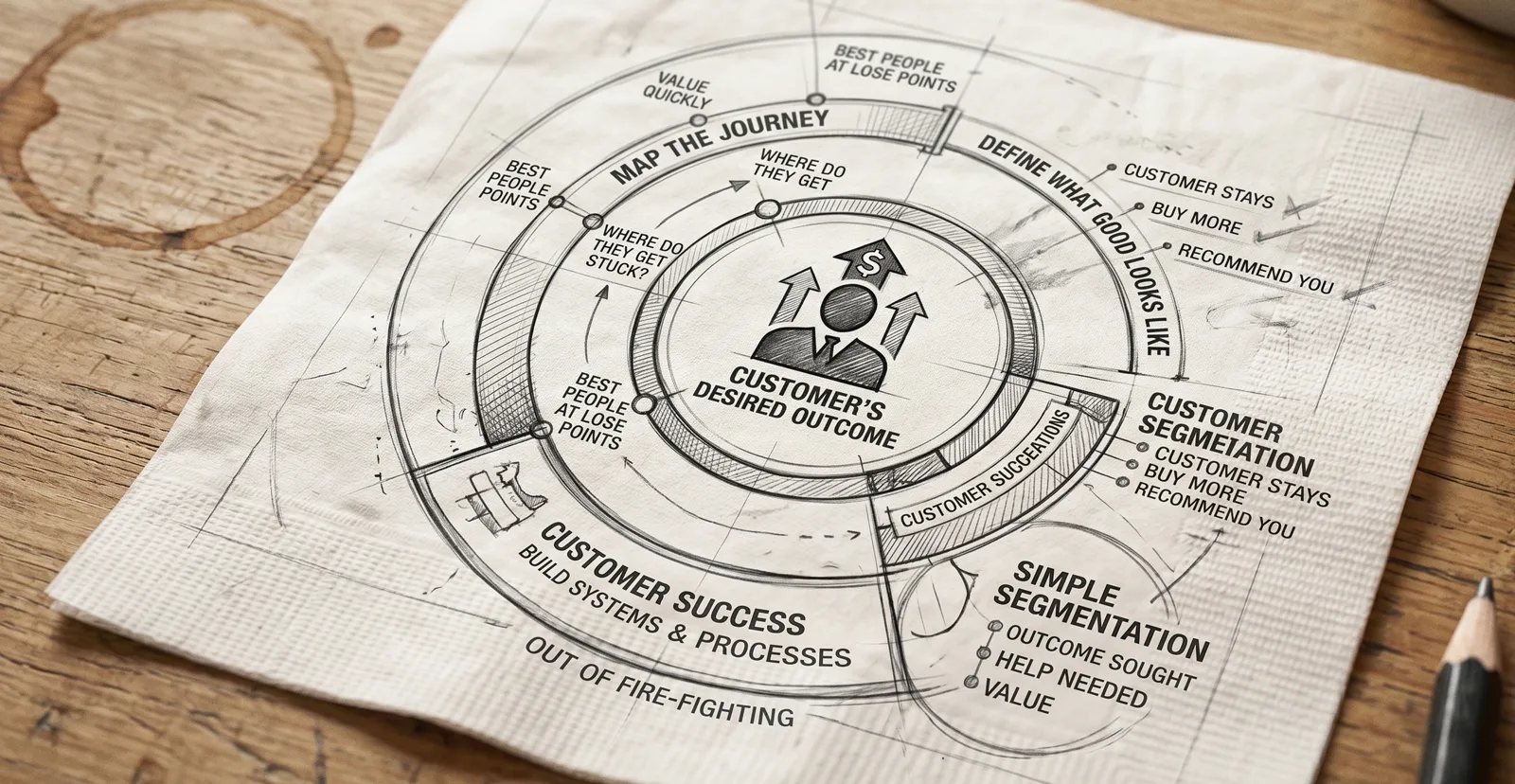
What outcome did your customers come to you for. Not what they bought. What they were trying to achieve. If you can't answer this for your top customer segments, every other piece of strategy is built on sand.
What does success look like for them. Tangibly. Specifically. In terms they would recognise.
Where in the journey are you most likely to lose them. This is where to put your best people, your best processes, and your most attention.
I genuinely believe that if you can answer these three questions clearly, you're already ahead of most businesses I've seen. The rest of the strategy follows from there.
Building the strategy from the customer outwards
Once you know what success means for your customers, the strategy starts to take shape. Here's how I usually think about it.
Map the journey honestly. From the moment they decide to buy through to the moment they renew, expand, or leave. Where do they get stuck. Where do they get value quickly. Where do you lose them.
Define what good looks like at each stage. Not generic milestones. Specific behaviours and outcomes that mean a customer is on track.
Decide who owns each stage. Sales, onboarding, customer success, support, product. The handovers between them are where customers fall through gaps.
Build the proactive work into the diary. If your team only ever reacts to inbound queries, they'll never get to the work that prevents the queries in the first place.
Measure outcomes, not activity. Did the customer get the value they came for. Are they staying. Are they expanding. Are they recommending you. Activity metrics are useful for diagnostics, but they shouldn't be the headline.
This isn't revolutionary. But the discipline of doing it properly, and not getting distracted by the latest playbook idea, is rarer than it should be.
Segmentation, without overcomplicating it
Most customer success strategies fall down on segmentation. Either they don't segment at all, and treat everyone the same, or they over-segment and end up with playbooks for fifteen personas that nobody can actually deliver.
The version I find works best is simple. Two or three segments based on real differences in what customers need, not just on contract value or industry.
The differences that usually matter:
What outcome they're trying to achieve. A customer growing fast needs different support to one trying to stabilise.
How much help they need. Some customers want a hands-off relationship and a great product. Others need active partnership.
How much they're worth to you over time. Not just contract value today, but realistic lifetime value.
Get this right and the rest of the strategy almost designs itself. Get it wrong and you'll spend the next two years trying to make a one-size-fits-all approach work for customers who don't fit it.
The role of customer success operations
This is the bit that gets overlooked the most. And it's the bit that quietly determines whether the strategy actually works.
Customer success operations is the function that builds and runs the systems, processes, and data infrastructure your customer success team relies on. Without it, even a great strategy turns into a team running on willpower and spreadsheets.
I've written about this in more detail elsewhere, but the short version is this. If you have a customer success team but no customer success operations, you're asking your CSMs to be strategists, salespeople, project managers, data analysts, and tool admins all at once. Most of the time, the strategist bit is the one that gets dropped.
Investing in operations frees your customer-facing team to do what they're best at. It's one of the highest-leverage moves you can make.
Tools, but not too many
A quick word on tools, because every customer success strategy conversation eventually gets to this.
You don't need much. A way to see who your customers are, what they're doing, and how they're feeling. A way to track the work your team is doing for them. A way to see whether they're getting value.
That can be one tool, three tools, or a stack of fifteen depending on the size and complexity of your business. The honest answer for most businesses I work with is that they have too many tools, none of them properly set up, and a team that's lost confidence in the data they produce.
If that's you, the fix is rarely buying more. It's usually getting the ones you have working properly first.
When to bring in outside help
I'm biased here, obviously. But there are moments when bringing in someone external is genuinely the right call.
When the strategy keeps not landing despite multiple internal attempts.
When the team is stuck in firefighting and can't carve out the time to design something better.
When you've grown faster than your customer success function and the cracks are starting to show.
When you're about to invest in a major new tool or process and want to get the strategy right first.
Outside help isn't there to take the work off your team. It's there to bring perspective, structure, and pace, and to make sure the strategy you end up with is one your team can actually deliver.
A few questions worth sitting with - If you're rethinking your customer success strategy, here are the questions I'd ask first.
Can your team articulate, in plain words, what your customers are trying to achieve and how you help them get there.
Do you measure whether customers are getting that outcome, or just whether they're using your product and renewing.
When you lose a customer, do you genuinely know why.
Are your CSMs spending more time being proactive or reactive in any given week.
If the answers feel uncomfortable, that's not a failure. That's where the work starts.
Where Pivotal Path comes in
This is the kind of work we do at Pivotal Path. We help businesses look at their customer success function honestly, work out where it's drifting from the customer, and reshape the strategy and operations so it actually delivers.
Not big rebuilds. Not generic playbooks. Just clear, practical changes that customers and the team can feel.
If you've been quietly worrying that your customer success function isn't quite working the way it should, that's usually a good sign you're ready for a conversation.
We're easy to talk to. No jargon, no pressure. Just a chat about what's going on and whether we can help.
The short version
If you only take a few things away from this, here they are:
- Customer success is the work of helping your customers get the outcome they came to you for. Everything else should serve that one job.
- Most strategies fail because they're built around what's easy to measure, treat all customers the same, lack senior ownership, or trap the team in reactive work.
- Start by getting clear on what your customers were trying to achieve, what success means for them, and where in the journey you're most likely to lose them.
- Build the strategy outwards from those answers. Map the journey, define what good looks like, decide who owns what, build proactive work into the diary, and measure outcomes rather than activity.
- Keep segmentation simple. Don't overcomplicate it.
Invest in customer success operations. It's the bit that quietly determines whether the strategy works.
And if you're stuck, bring in someone with the perspective to help you see clearly - that's the whole game.
Working on this in your business?
We help UK SMEs and scale-ups turn this kind of thinking into action.
Read next
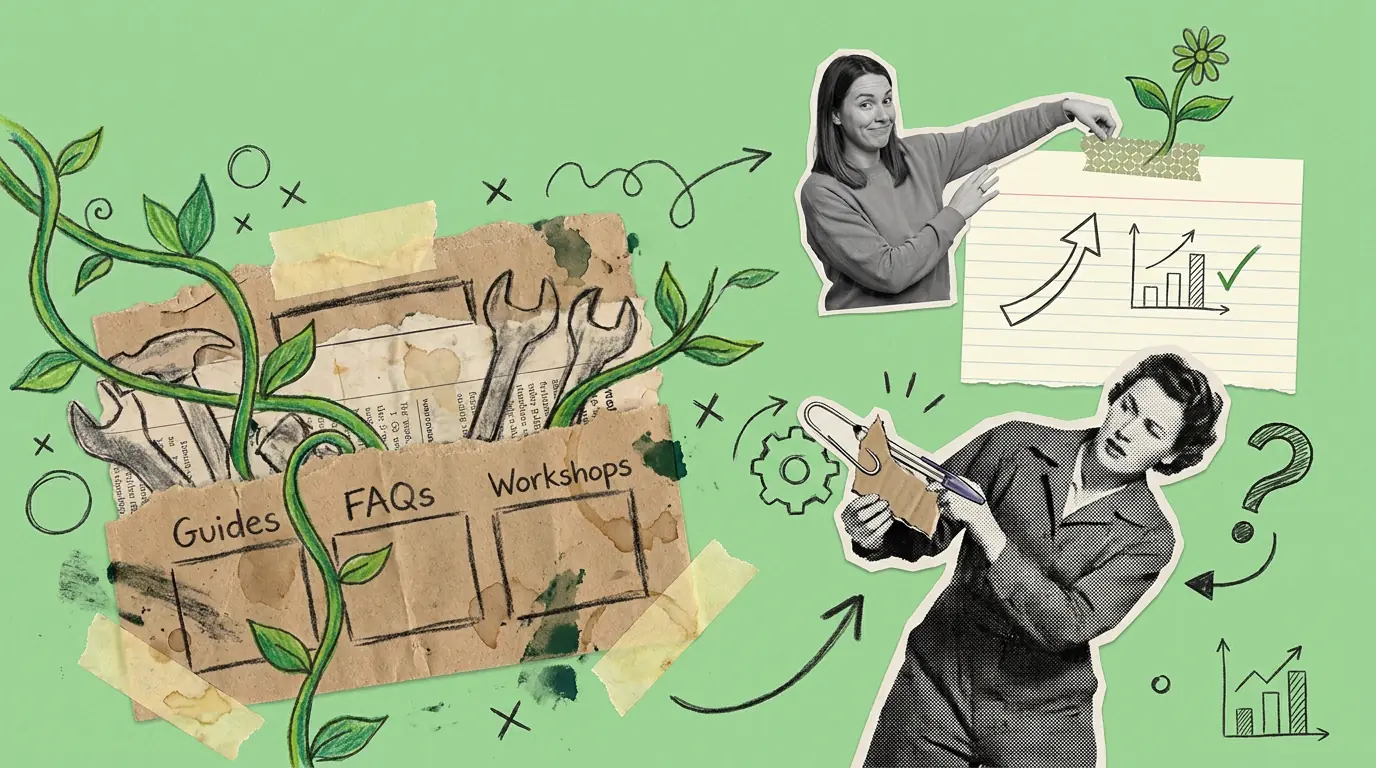
Customer education: the CS lever nobody builds deliberately

Time-to-Value: The Metric Your CS Team Is Probably Measuring Wrong
Building CS Before You Have CS Ops: What to Do First

Mutual success plans: the operational reality

What a Customer Success Playbook Actually Needs to Contain