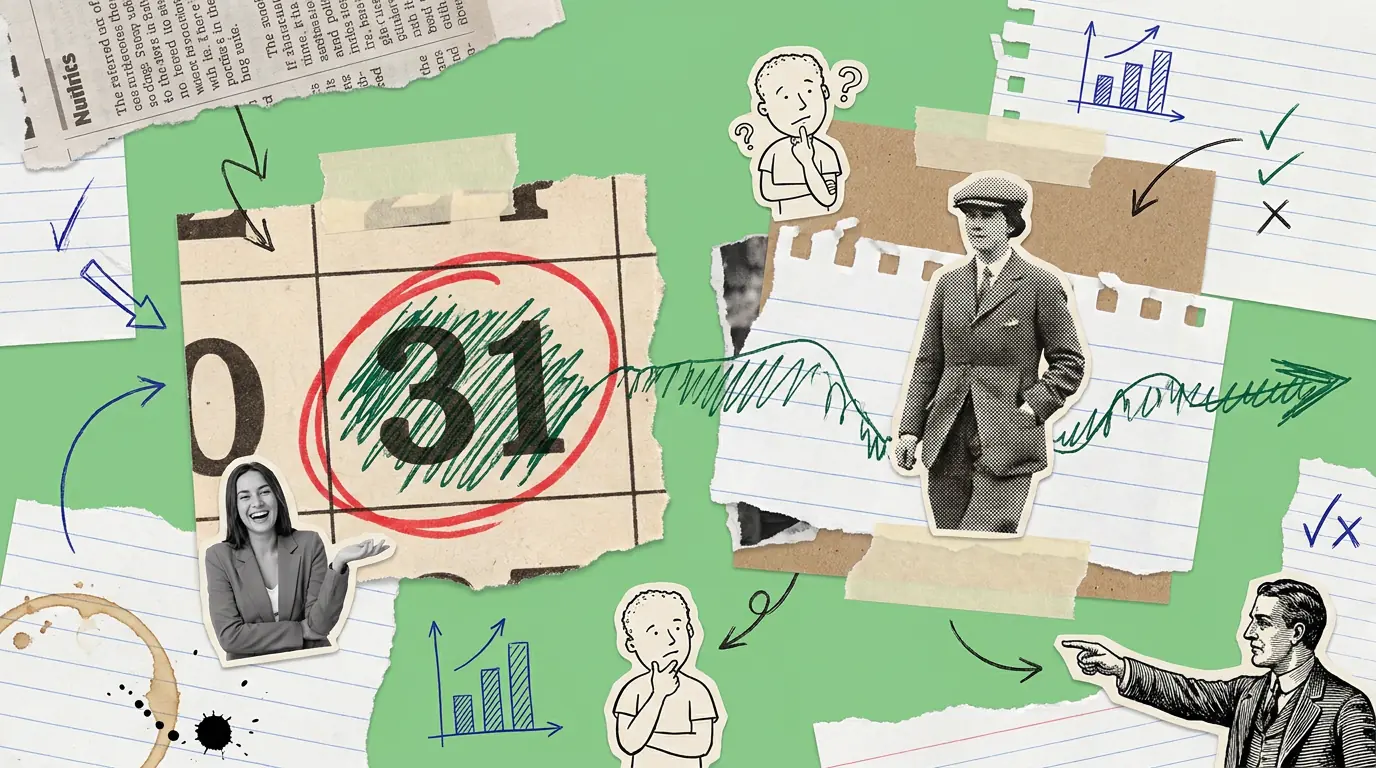
The standard renewal timeline looks roughly like this: ninety days out, the CSM sends a check-in. Sixty days out, the commercial conversation starts. Thirty days out, the contract is being negotiated. The renewal either closes or it doesn't.
This model treats renewal as an event: something that happens at a fixed point in the calendar, preceded by a fixed set of activities, followed by either a celebration or a post-mortem.
The problem with this model isn't the timeline itself. Ninety days is a sensible window. The problem is what it implies about the ninety days before the ninety days, and the ninety days before that, and the ninety days before that. If the customer's renewal is only actively being managed in the last quarter of their contract, most of the factors that determine whether they renew have already been decided. You're running the conversation too late to change the outcome.
What renewal actually depends on
Renewal is a decision the customer makes (consciously or by default) based on the cumulative experience of the contract period. It depends on:
- Whether they achieved the outcome they bought the product for
- Whether the support and engagement they received felt proportionate to the value they were getting
- Whether the relationship gave them confidence in what's coming: that the product is improving, that their feedback is being heard, that the vendor sees them as a partner and not just a contract
- Whether, when things went wrong, someone fixed them competently and quickly
None of these factors are determined in the ninety-day window before renewal. They accumulate month by month, across every interaction, from the kickoff call to the most recent support ticket response.
The renewal conversation at ninety days is a harvest, not a cultivation. If the cultivation hasn't happened throughout the year, the harvest is difficult.
What a renewal motion looks like
A renewal motion is the continuous set of activities and signals that move a customer toward renewal throughout their contract term. It doesn't replace the ninety-day commercial conversation. It makes that conversation easier, shorter, and more often successful.
The components that tend to matter:
Success milestones with explicit acknowledgement. When a customer hits a meaningful outcome (their first major workflow running, their team achieving a productivity target, a business metric moving in the direction they wanted), the motion creates a moment around it. Not just a dashboard update. A conversation that connects the outcome to the original goal. This serves two purposes: it confirms the customer has registered the value, and it creates a reference point the CSM can draw on in the renewal conversation rather than having to reconstruct the whole year from scratch.
Regular business-relevant check-ins. Not every touchpoint needs to be a formal business review. But every quarter, the customer should have had a conversation that's explicitly oriented around their business goals, not just product usage. Is the problem they were trying to solve getting solved? Is the context changing in a way that means the solution needs to adapt? The CSMs who run these conversations build relationships that renew. The CSMs who only engage when usage drops or a ticket is filed are running a reactive model that makes renewal a negotiation rather than a formality.
Internal risk signals acted on early. A renewal motion requires that the CSM (or CS Ops) is watching for signals of risk throughout the year, not just in the renewal window. Usage declining in Month Six is a very different intervention from usage declining in Month Ten. The earlier the signal, the more time there is to address what's causing it. CS Ops typically builds the tooling and the alert logic that makes early signals visible; CSMs are the ones who have to act on them.
Expansion tied to success. The renewal motion and the expansion motion are the same motion. A customer who has expanded (taken on more users, added a module, moved a new team onto the platform) is almost never at renewal risk. Expansion is the strongest retention signal available. Making expansion feel natural, well-supported, and commercially fair is part of the renewal motion even when it looks like a growth conversation.
Why the event model persists
If a continuous renewal motion produces better outcomes, why do most CS teams still run a renewal event?
Partly because the event is visible and trackable. You can put "renewal at risk" on a dashboard. You can count renewals closed and renewals lost. The motion is harder to measure: how do you capture the value of a check-in call that happened in Month Four and shifted a customer's confidence in the relationship?
Partly because the motion requires resource throughout the year, not just at the ninety-day crunch. In under-resourced CS teams, the pressure is to deprioritise accounts that aren't immediately at risk. The motion depends on consistent engagement even with accounts that look healthy. That discipline is hard to maintain when there are genuine fires elsewhere.
And partly because the commercial systems often reinforce the event. CRM alerts fire at ninety days. Commission structures pay on renewal close. The organisation's attention assembles around the deadline. None of that infrastructure is set up to reward Month Seven engagement that isn't attached to an opportunity record.
The CS Ops contribution
CS Ops is well-positioned to shift the model from event to motion, because the shift requires both tooling changes and structural changes that CS Ops can design and implement.
Tooling: health score alerts that fire at meaningful risk thresholds throughout the year, not just as renewal approaches. Milestone tracking that surfaces successes and connects them to original goals. Engagement logging that gives the ninety-day conversation a complete record of what's actually happened.
Structure: a calendar of proactive touchpoints that runs throughout the year, built into CSM workflow rather than left to individual discretion. Expansion triggers that route to the right commercial conversation when the signal is there. Escalation paths when early risk signals aren't being acted on.
What CS Ops can't do is change the culture unilaterally. The shift from event to motion is as much a CS leadership decision as a tooling decision. It requires accepting that the measure of renewal success isn't the renewal rate in the ninety-day window; it's what happened throughout the year that made the conversation in the ninety-day window straightforward.
Questions worth sitting with
- If a customer's renewal conversation were removed from your CRM and you had to reconstruct what value they'd received from their contract, how easy would that be? What does the answer tell you about the motion you've been running?
- Are there accounts in your portfolio that are currently healthy by your segmentation but that you'd be uncomfortable describing in a renewal conversation? What's the gap?
- When your CSMs engage with customers between renewal windows, what are they typically discussing: product updates, support issues, or business outcomes? Which of those conversations contributes most to renewal confidence?
- Does your commercial team's renewal forecast rely primarily on CSM relationship intelligence or primarily on health score data? What does that tell you about which of those signals your organisation trusts?
- For customers who churned last year: at what point in their contract term was the renewal already decided, even if the conversation happened ninety days out?
Where Pivotal Path comes in
Designing a renewal motion (the processes, tooling, cadence, and signals that make renewal a year-round discipline rather than a quarterly crisis) is some of the highest-impact CS Ops work available. We help CS teams build the infrastructure that makes the renewal conversation at ninety days feel like a confirmation rather than a negotiation.
If your renewal rates aren't where you want them, and the ninety-day conversation is where the effort is concentrated, we're happy to talk through where in the year the motion might be missing.
The short version
- Most CS teams treat renewal as an event: a fixed-window commercial conversation preceded by a fixed set of activities.
- Renewal is actually a decision customers make based on cumulative experience across the entire contract period. The ninety-day window is a harvest, not a cultivation.
- A renewal motion is the continuous set of activities (milestone acknowledgement, business-relevant check-ins, early risk signals, expansion tied to success) that move customers toward renewal throughout the year.
- The event model persists because it's measurable, visible, and aligned with how commercial systems are built. The motion requires discipline that is harder to reward and track.
- CS Ops builds the tooling and structure that makes the motion possible; CS leadership has to make the cultural shift.
Working on this in your business?
We help UK SMEs and scale-ups turn this kind of thinking into action.
Read next

The renewal conversation nobody prepares for

What your offboarding process reveals about your customer success function

The QBR Ritual That Nobody Believes In
Defining Success Before the Sale: The CS Conversation That Usually Starts Too Late

The QBR Format That Fits Nobody