The CS Tech Stack: What to Buy, and in What Order
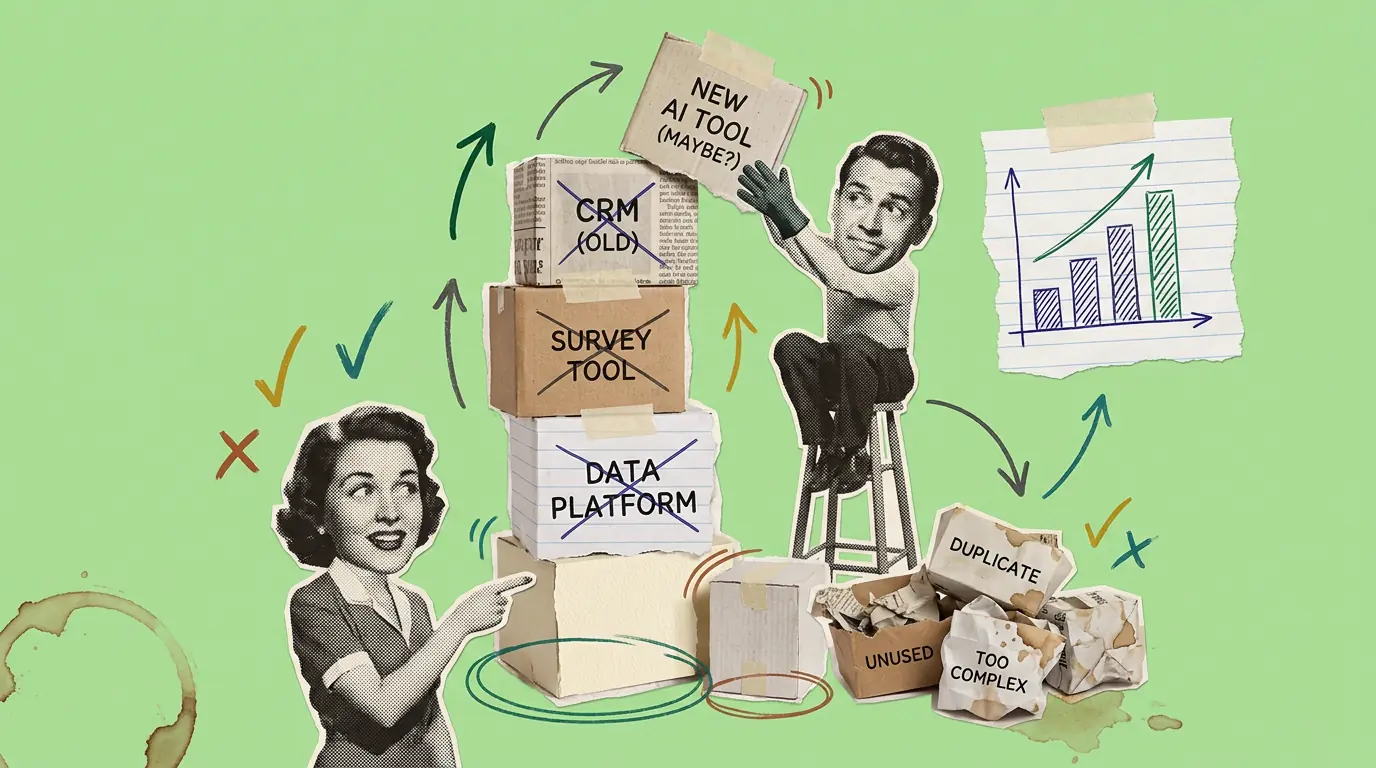
There's a pattern I've watched play out enough times to have given it a name in my head: the tooling trap. A new CS leader joins, takes a look at the existing stack, decides it's not fit for purpose, and one of the first things on their list is a new customer success platform. The rollout takes four months. The team is trained. The dashboards are built. And six months later, the platform is telling a beautiful, consistent story about data that was put in wrong, measured against definitions that were never quite agreed, and connected to a CS motion that hasn't actually changed.
The tool did its job. The underlying problem was never the tool.
The sequencing problem in CS technology is real, and it's underappreciated, partly because the tools are genuinely good now, and partly because the vendors are excellent at making the platform look like the solution to whatever problem you describe.
But a CS team buying tooling before it has consistent process is making the same mistake as someone who buys a filing cabinet before they've decided how they want to organise their files. The cabinet will work. The chaos will now be inside a drawer.
The anti-sequence
Let me describe the wrong order first, because most CS teams live some version of it.
Step one: buy the platform. Usually a full CS management platform: something that promises health scoring, playbooks, automated workflows, and a 360-degree customer view. It's the category that gets most of the CS tech spend, and often the first thing a new CS leader is shown when they start building a stack.
Step two: configure it. The team spends significant time (often several months) doing the implementation. Data integrations, health score weightings, segment definitions, playbook templates. All this configuration work requires the team to make decisions it was never quite ready to make.
Step three: discover the dependency. The platform's health score is only as useful as the process it's scoring. The playbooks are only as useful as the plays the team has agreed on. The 360-degree view only tells you something meaningful if the data going in is clean and the definitions behind it are consistent. At this point, the team is doing the process design work it should have done in step zero, but now it has to do it inside the architecture of a platform it's already bought.
The result is a CS tech stack that is technically functional and practically underused. The CSMs open the platform. They can see the dashboards. But the numbers don't match their read of the accounts, the playbooks don't quite fit the situations they're in, and the whole thing quietly becomes a reporting layer rather than a working tool.
The right sequence
The right order is harder to sell internally, because it involves doing work before showing results. But it's more reliable.
First: define what you're trying to measure. Not at the dashboard level, but at the outcome level. What does a healthy account look like? What are the signals that distinguish accounts on a good trajectory from accounts heading toward churn? What are the milestones that matter in the customer's journey? None of these questions should be answered inside a platform. They should be answered in a room with the CS team and the CS leader, and the answers should be written down before anyone talks to a vendor.
Second: build the process consistently. Before any tooling automates a motion, the motion should be running consistently by hand. What does a good onboarding look like? What's the standard check-in cadence? What triggers an escalation? When a CSM encounters a risk signal, what do they do? These questions should have answers that most of the team would give consistently. If they don't, the team doesn't yet have a process. It has individual approaches that look roughly similar. Automating that is not a productivity gain; it's automation of inconsistency.
Third: identify what you want the tool to do. Once the process is stable, the tooling question becomes specific: what would we like to stop doing by hand? Where is the manual overhead high enough to justify building automation? Where is the human judgement required, and where is it not? This is a much more productive conversation to have with vendors than "here is our pain, tell us how your platform solves it."
Fourth: buy in category order. Not all CS tools are the same, and buying the most powerful category first is usually the wrong move. The category sequence that tends to work is: visibility first, then communication, then playbooks, then platform.
Category order explained
Visibility tools are the ones that tell you what's happening in your accounts: product analytics, usage data, the raw signals. These are often the least glamorous part of the stack, but they're the foundation. Without reliable visibility into what customers are actually doing, every other layer is building on sand.
Communication tools are the ones that enable the CS team to reach customers at the right moment, at scale: automated lifecycle emails, in-app messaging triggered by usage patterns, check-in scheduling. These tend to have the fastest and most tangible return on investment, because they extend the CSM's reach without requiring the CSM to be present for every touchpoint.
Playbook and task tools are the ones that turn an agreed CS process into a structured workflow: triggering actions based on conditions, managing tasks across the CSM team, surfacing the right things to work on at the right time. These require the underlying process to be consistent before they add value; a playbook tool running inconsistent plays is just a complicated to-do list.
The full CS platform (health scoring, a complete customer record, cross-team collaboration, renewals management, the whole integrated view) is the right destination. But it's a destination that's earned once the rest is in place. A CS team that starts here before the earlier layers are stable is buying sophistication before it has bought reliability.
The process-first problem in practice
The reason CS leaders jump to the full platform first is usually organisational pressure. A new CS leader needs to show they're doing something, and "we're going to spend six months getting the process right before we evaluate tooling" is a hard pitch to leadership in a growth company.
There are shortcuts that work reasonably well. A lighter-weight CS platform (something that handles health scoring and task management without requiring a six-month implementation) can be a sensible intermediate step while the process work happens in parallel. The key is to resist the temptation to let the platform's data model become the de facto process definition. That's where the trap is: the configuration decisions get locked in before the team has figured out what it's actually trying to measure.
What CS Ops can do
CS Ops is the function that should be asking the sequencing questions. Not "which platform do we buy?" but "what process does the platform need to automate?" Not "what should the health score weigh?" but "what have we decided a healthy account looks like, and do we all agree on the definition?"
The CS Ops team is the design layer between the process and the tooling. Without it, the process-vs-platform tension defaults to whoever in the organisation shouts the loudest, usually the person who has just come back from a vendor demo.
Questions worth sitting with
If your health score system was turned off tomorrow, how would your CSMs know which accounts to prioritise? If the answer is "they'd use their judgement", what is that judgement based on, and is it consistent across the team?
What was the last thing your CS platform showed you that genuinely changed how you ran an account, not confirmed what you already thought, but showed you something you'd missed?
If you were building your stack again from scratch, what would you buy in the first 30 days, and what would you wait 90 days for?
The short version
Most CS teams buy tooling before they have stable process. The result is platforms that are technically functional and practically underused: dashboards telling stories about data that was never quite right.
The right sequence: define what you're measuring, build consistent process, then decide what the tool needs to do, then buy in category order: visibility first, communication, playbooks, platform.
CS Ops is the function that asks the sequencing questions. Without it, the tech stack gets shaped by vendor demos rather than process design.
Where Pivotal Path comes in
Pivotal Path helps CS teams get the sequencing right, from process definition through to tech stack design. We work with CS leaders who are either starting from scratch or untangling a platform implementation that hasn't delivered what was promised. That includes the upfront process work, the tooling selection decisions, and the CS Ops structure that keeps it consistent once it's in place.
If your CS platform is working harder than your CS process, we should talk.
Working on this in your business?
We help UK SMEs and scale-ups turn this kind of thinking into action.
Read next

What your CRM data isn't telling you about customer health

Automation in CS: Where It Helps, and Where It Backfires

What Your CS Health Score Is Actually Measuring, and What It's Probably Missing
The CS Knowledge Base Nobody Uses

Meet Aida, Pivotal Path's In-House AI Assistant