Office and Fun, free, by Pivotal Labs
Pick a name at random, in front of everyone
Paste a list, spin, and get a genuinely random result with optional weights, a remove the winner mode and an exportable draw history. It runs in your browser and stores nothing.
Loading Random Wheel Picker...
What Random Wheel Picker does
Paste a list of names, spin the wheel, and get a fair random winner, with optional weights, a remove-the-winner mode, and a draw history you can export. Nothing leaves your browser.
Doing this job well
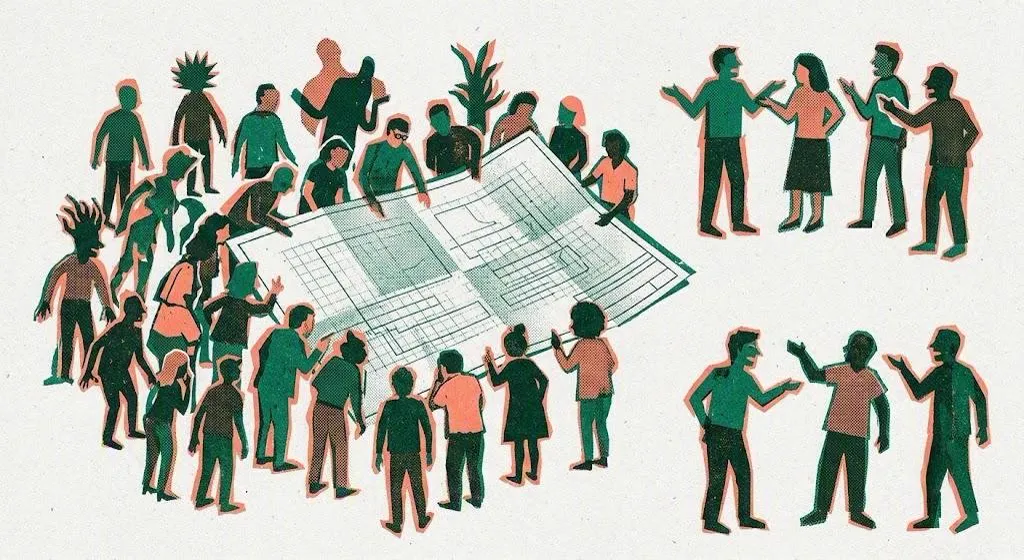
In a workshop, who goes next is a real decision disguised as a trivial one. Left to the facilitator, the order carries meaning whether or not any was intended: the confident people go first, the quiet ones are asked last, and a group learns very quickly whose contribution is treated as optional. Handing the choice to something visibly arbitrary removes that, and removes it in front of everybody, which is the part that counts.
The visibility is the whole mechanism. A facilitator saying they picked at random is asking to be believed. A wheel spinning on the screen is not asking anything. It is the same reason a raffle is drawn in public rather than announced afterwards, and it costs nothing to do it the honest way.
Weighting exists for the cases where fairness is not the same as equal. Somebody who has already presented twice should not be as likely as somebody who has not spoken, and pretending otherwise in the name of randomness produces a session where the same three people do all the work. Remove the winner does the blunter version of the same job, and is usually what a running order actually needs.
Randomness itself is worth a sentence, because it is easy to do badly. Taking a random number and dividing by the list length introduces a small bias towards the early entries, which for eight names does not matter and for a prize draw might. This uses the browser's cryptographic source and avoids that bias, which is the sort of detail that only matters when it is wrong.
The draw history is the practical part. If the picking is meant to be fair across a whole day, somebody has to be able to see what happened, and memory is not that. Exporting the sequence also settles the occasional good natured argument about whether the wheel has it in for somebody.
It runs entirely in your browser and keeps nothing after you close the tab, which is what you want from something displayed on a screen in a room full of other people's colleagues.
Common questions
Is it actually random?
It uses the browser's cryptographic random source and avoids the modulo bias that a naive implementation introduces towards the earlier entries. For eight names that bias is irrelevant; for a prize draw it is not.
Can I stop the same person coming up twice?
Yes, remove the winner mode does exactly that, which is usually what a running order needs.
Why would I weight the entries?
Because fair is not always equal. Somebody who has presented twice should not be as likely as somebody who has not spoken at all.
Can I keep a record of the draws?
Yes, the history exports, which matters if the picking is meant to be fair across a whole session rather than one spin.
Is anything stored?
No. Nothing is uploaded and nothing survives the tab closing.
Related applets
Built by Pivotal Labs
We build software, and this is a small piece of it.
Pivotal Labs is a software development and product management team. The applets on this site are the offcuts, the small things we build for ourselves and give away. The work we are paid for looks rather different.
When the browser tab is not enough
A one-off clean-up is a job for an applet. Doing it the same way every month, across systems that disagree with each other, is a job for customer journey workshops.
Further reading

The QBR Ritual That Nobody Believes In

Scaled CS: what it actually means and when you need it
Automation in CS: Where It Helps, and Where It Backfires
CS and Product: Closing the Feedback Loop That Usually Stays Open
The QBR Format That Fits Nobody